Making better decisions together
At Portsmouth Hospitals University NHS Trust, we want you to be an active partner in decisions about your health and care.
That is why an approach called Realistic Medicine is part of our commitment to providing care that is centred on what matters most to you.
When decisions need to be made about your treatment or care, we will work with you to find the option that is right for you. In many cases this will be straightforward, but some treatments and choices require more careful discussion about the risks and benefits to you in your individual circumstances.
Our healthcare professionals will bring their medical knowledge and experience. You bring your own views, preferences, goals and understanding of what is important in your life.
Together, we want to make decisions that best meet your needs.

You have the right to be involved in decisions about your care.
We will:
-
Listen to your views, preferences and circumstances
-
Give you clear information about your options
-
Explain what each option could mean for you
-
Support you to make a decision that feels right for you
-
Give you time to ask questions and think things through
It's important that you understand your options before making a decision.
You may find it helpful to think about, and ask, the following questions:
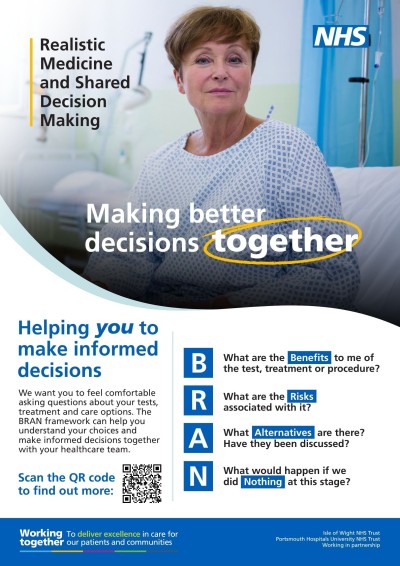
Benefits: What are the benefits to me of the test, treatment or procedure?
Risks: What are the risks or side effects?
Alternatives: Are there other options?
Nothing: What would happens if we did nothing at this stage? Is this something I want to discuss more?
These questions are known as the BRAN questions and can help guide conversations about your care.
Remember, there are no silly questions, you do not have to make a decision straight away, and you can talk things through with family members, carers or people you trust. It is OK if your choice is different from what someone else might choose.
There is not always one "right" answer when it comes to treatment and care.
The best decision is the one that fits you, your circumstances and what matters most in your life.
Being involved in decisions can help you:
-
Feel more confident about your care
-
Better understand your options
-
Make informed choices
-
Have a better experience of care
Realistic Medicine and Shared Decision Making forms part of our Clinical Strategy, and our ongoing commitment to improve patient experience, health outcomes and patient safety.
This approach is absolutely not about asking patients to make decisions on their own.
Our clinicians will continue to provide expert advice, explain benefits and risks, and recommend appropriate treatments.
The difference is that decisions are made in partnership, with your views and priorities helping to shape the care you receive.
By listening, talking openly and deciding together, we can ensure your care reflects both the best medical evidence and what matters most to you.
Do I have to make decisions about my care on my own?
No. Your healthcare team will provide expert advice, explain your options and answer your questions. Shared Decision Making means working together to reach a decision that is right for you.
What if I don't want to be involved in making decisions?
People vary in how involved they want to be. Some people prefer to make decisions themselves, while others want more support from their healthcare team or loved ones. We will respect your preferences and support you in the way that feels right for you.
What if I need time to think about my options?
That's absolutely fine. Unless urgent treatment is needed, you do not have to decide straight away. You can take time to consider your options and discuss them with family members, carers or people you trust.
Can I change my mind?
In many situations, yes. If your circumstances or preferences change, speak to your healthcare team. They can discuss your options with you and help you understand what choices are available.
What if I don't understand something?
Please ask. There are no silly questions. We want you to have the information you need to feel confident and informed about your care. If something is unclear, we will explain it in a different way.
Can a family member, friend or carer be involved?
Yes. If you would like support, you can invite a family member, friend or carer to be part of conversations about your care, where appropriate.
What if my choice is different from what someone else would choose?
That's OK. People have different priorities, circumstances and preferences. The right decision is the one that best fits your needs, values and what matters most to you.
How does this fit in with the Patient Charter?
The NHS Patient Charter is a document that outlines what a patient should expect from their GP surgeries, and indeed what is expected of patients in return. Many of the key areas revolve around access to GP services, though also highlighting what a patient can expect in terms of being involved with decisions about their care in the primary care setting.
Our Realistic Medicine approach is focused specifically on how clinical teams and patients together will make decisions about a patients care and choices, to ensure the decisions made better reflect an individual patient’s priorities and wishes, by understanding what is important to them. This requires honest discussions about the options, risks, benefits and alternatives.