
Publish date: 6 May 2026
A major cancer research study at Portsmouth Hospitals University NHS Trust (PHU) is being supported by patients at Queen Alexandra (QA) Hospital to help improve early cancer detection.
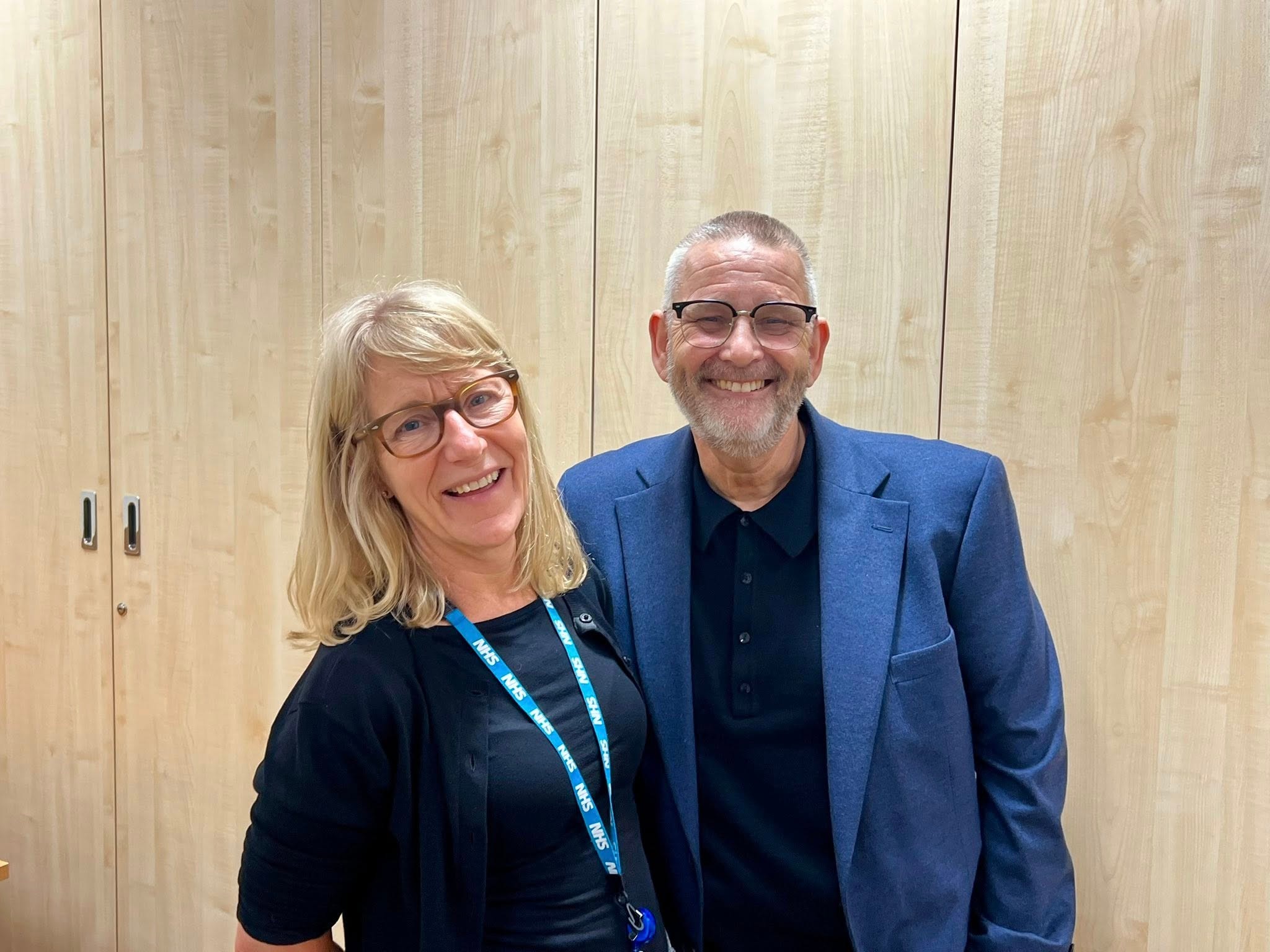
Robert Fielder, 61, was diagnosed with pancreatic cancer in November 2025. Planned surgery at University Hospital Southampton was abandoned when the cancer was found to have spread to his liver, meaning it was no longer operable. Rob is now receiving palliative chemotherapy at QA Hospital, where he has also chosen to take part in the MODERNISED research study, an early cancer detection trial aiming to assess the effectiveness of a new blood test to identify cancer sooner.
The study is being run by researchers from the University of Southampton in partnership with the Southampton Clinical Trials Unit and biotech company Proteotype Diagnostics Ltd. It is funded by the National Institute for Health and Care Research (NIHR) Invention for Innovation (i4i) programme and the Office for Life Sciences.
PHU began recruiting to the MODERNISED study over a year ago and has already recruited more than 250 patients towards a target of 300. The study covers ten different tumour types, including pancreatic and breast cancer and Rob is one of more than a thousand people who have taken part so far across the UK.
Rob, who documents his cancer journey through daily blog posts and videos on social media and has since started fundraising to create a seaside retreat for people with terminal cancer, explained why research matters so much to him. He said: “If I can leave anything behind to help someone else who may be walking in my shoes in the future, that can only be beneficial. I’ve looked at ways that I can do that and one of the ways is taking part in research studies.
“All research is beneficial because eventually it will help work towards a cure or life expectancy. Palliative used to mean weeks or months. Because of research and because of people looking at how we can deal with this disease, palliative care doesn’t mean weeks or months anymore. If the medication works for you, and if your lifestyle works for you, you can extend that. But we can only do that if people are prepared to help by getting involved in research programmes.”
Rob also praised the care he has received at QA, adding: “The service I’ve been getting from QA has been absolutely amazing. If it wasn’t for them, I don’t think I’d be sitting here talking because every single person I have met has done nothing but give me support and the strength to carry on and in the dark moments, which you get with chemotherapy and your cancer journey, you know you’ve got all these people behind you. I’m very fortunate to live in this area to have that team.”
Lisa Murray, Clinical Nurse Specialist at QA, said involving patients in research is crucial. She said: “Research simply wouldn’t be possible without the generosity of patients like Rob. By choosing to take part, people are helping us to improve how we detect and treat cancer for future patients. Early diagnosis gives people more options and better outcomes, and studies like MODERNISED are a vital step in getting us there.”