
Publish date: 12 November 2026
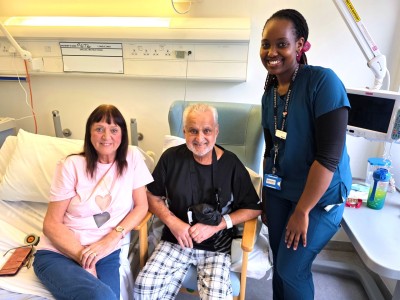
Pete Smith became the first patient to benefit from Portsmouth Hospitals University NHS Trust’s new Outpatient Antimicrobial Therapy (OPAT) service after already spending time in hospital being treated for a blood infection.
The new service supports suitable patients who need longer courses of antimicrobial treatment to leave hospital earlier, or potentially avoid a hospital stay altogether, while continuing to receive specialist clinical involvement.
Pete is now able to continue his treatment at home, carrying his medication in a small, lightweight bag which allows him to move around and begin returning to his normal routine.
Pete said, “Having this means I’m not stuck at home or in hospital. It’s such a good system. If we want to go out for the day, for example, we can just go, and it means my hospital bed is freed up for someone else who needs it.”
Pete’s wife Sue has also been trained by the pharmacy team at PHU to support him with his medication and help care for the line used to deliver his treatment safely. Although initially nervous about taking on the role, Sue found the training easy to follow and was able to practise with support from the team while Pete was still in hospital.
Daphine Nassolo, Pharmacist at QA Hospital, has been supporting the start of the project and helped train Sue. As part of the OPAT team, Daphine will also help follow up with patients, with regular reviews to make sure their infection is responding to treatment as expected.
Daphine said, “A big part of the service is helping patients get back to their normal day-to-day activities sooner, while having more participation in their health. I’m excited that we have had our first patient under this new service and I look forward to being able to support more patients in getting home sooner.”
For Pete and Sue, being able to return home earlier than expected has made a significant difference.
Sue said, “Having someone in hospital is difficult for them and for those around them, but by doing this Pete can come home sooner, and it will be lovely to get back to some normality.”